
Innovation has become one of the most overused words in business. Yet despite record investment in research, technology and digital transformation, many companies still struggle to turn innovation into sustainable growth.
The difference rarely comes down to budget alone. The organizations that consistently outperform competitors follow a clear business innovation strategy: they focus on solving meaningful customer problems, prioritize the highest-impact opportunities and combine internal expertise with external innovation.
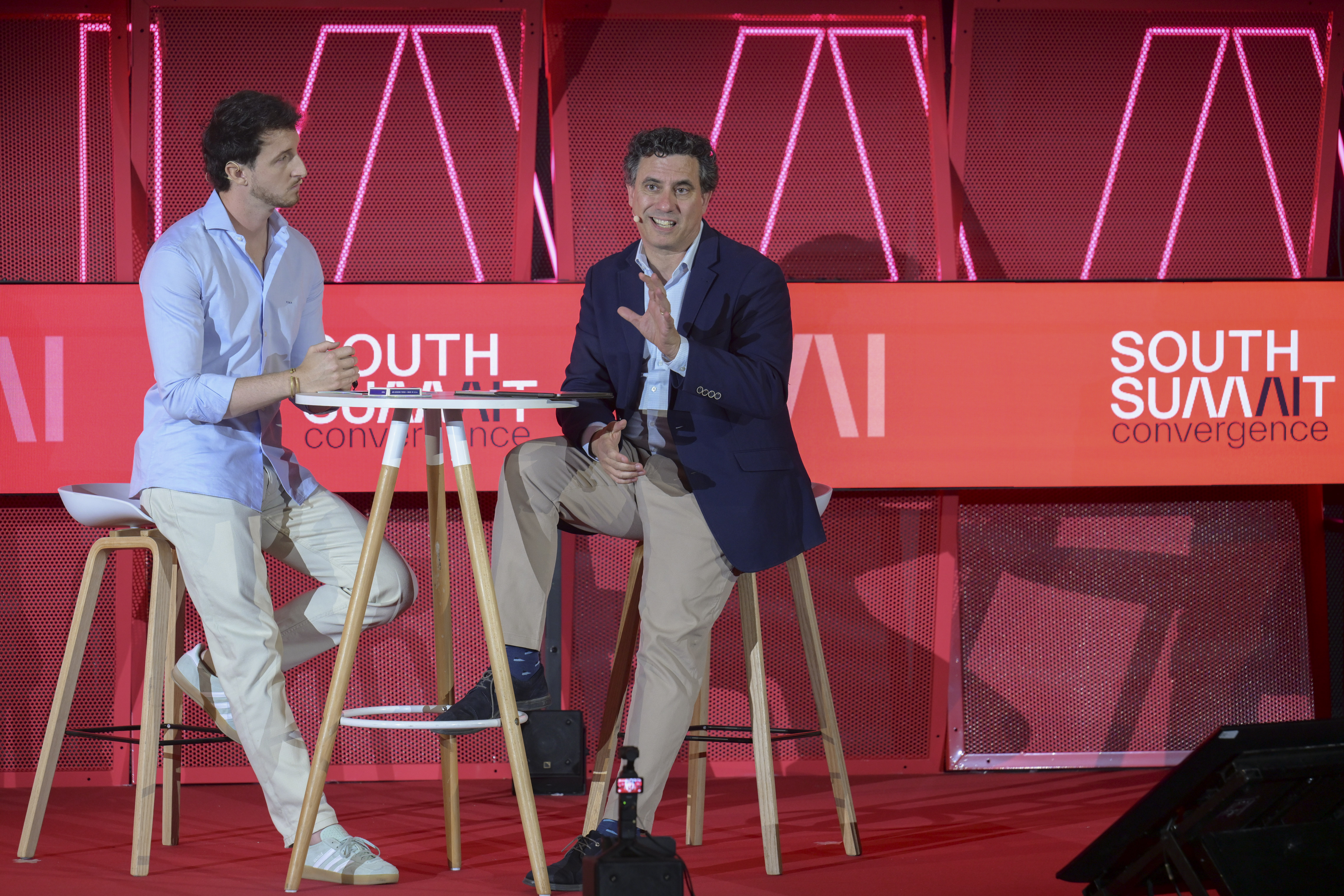
At South Summit Madrid 2026, industry leaders from Telefónica and Wayra shared practical lessons on how corporations can innovate faster while avoiding the common pitfalls that prevent transformation from delivering results.
What is a business innovation strategy?
A business innovation strategy is a structured approach that aligns technology, product development and business goals to create long-term competitive advantage.
Rather than treating innovation as a collection of isolated projects, successful companies build repeatable systems that help them:
● Identify high-value opportunities.
● Develop products that solve real customer needs.
● Test and improve ideas quickly.
● Scale successful innovations across the organization.
The most effective strategies balance incremental innovation, which improves existing products and services, with disruptive innovation, which explores entirely new markets and technologies.
Why most innovation strategies fail
Many corporate innovation initiatives never generate meaningful business value because companies spread resources too thinly. Instead of concentrating investment on a few transformational opportunities, organizations often launch dozens of pilot projects with limited impact. This creates what many experts describe as innovation theater: plenty of activity but little measurable return.
Another common mistake is focusing on technology before customer value. Complex solutions may impress internal teams, but if they fail to solve a genuine market problem, adoption remains low. Lengthy approval processes and risk-averse cultures also slow experimentation, preventing companies from learning through rapid testing and iteration.
Three innovation lessons from successful founders
During the The Magic of Innovation session at South Summit Madrid 2026, Sebas Muriel, Chief Digital Officer at Telefónica, explained that great innovation is often invisible to the end user. "When technology is really well designed, it feels almost like magic."
The goal is not to showcase technological complexity but to remove it, creating seamless customer experiences. From the discussion, three principles emerged.
1. Focus on fewer, higher-impact initiatives
Muriel summarized his approach with a simple philosophy: "Fewer, bigger, better."
Rather than pursuing every new trend, successful companies concentrate resources on solving large-scale problems that can create value for millions of customers.
This disciplined focus enables teams to dedicate their energy to initiatives with the greatest strategic potential instead of managing dozens of competing priorities.
2. Prioritize technologies that strengthen your core business
Innovation should be guided by strategic relevance rather than hype. Telefónica uses an internal technology radar to evaluate emerging trends and identify those most likely to reshape its business.
Today, its priorities include:
● Cybersecurity
● Cloud sovereignty
● Agentic AI
By concentrating investment in clearly defined areas, organizations improve execution while avoiding fragmented innovation efforts.
3. Combine internal capabilities with startup innovation
One of the strongest themes of the session was the importance of a best-of-breed innovation model. Rather than building everything internally, companies should focus on the capabilities that create competitive advantage while collaborating with startups for specialized technologies.
Muriel described innovation as a continuous cycle: "Test, fail, improve, iterate, and keep improving until you build the right product."
This mindset allows corporations to innovate with the speed and flexibility typically associated with startups.
Why open innovation is becoming essential
For many startups, technology is no longer the biggest obstacle to growth. Distribution is.
According to Carlos Ruisánchez, Head of Ecosystem at Wayra, access to millions of customers is often more valuable than additional funding.
Large corporations can provide exactly that through open innovation, helping startups scale while gaining access to new technologies and entrepreneurial talent.
This collaborative model has already delivered significant results for Wayra:
● More than 100 companies invested in.
● €260 million invested since launch.
● Over 520 startups in its portfolio.
● 218 startups actively collaborating with Telefónica.
● More than €700 million in business generated across the ecosystem.
These figures illustrate how partnerships between corporations and startups can accelerate innovation for both sides.
How to build a successful innovation strategy
Companies looking to improve their innovation capabilities can apply several practical principles:
● Prioritize a small number of high-impact initiatives.
● Focus on solving real customer problems rather than showcasing technology.
● Build innovation around strategic business priorities.
● Experiment rapidly and learn through continuous iteration.
● Collaborate with startups to complement internal expertise.
● Measure innovation through business outcomes, not the number of projects launched.
The future of corporate innovation
Innovation is no longer about creating isolated labs or chasing every emerging technology.
The companies leading digital transformation are those that combine strategic focus, customer-centric thinking and open collaboration with startup ecosystems.
As artificial intelligence, cybersecurity and cloud technologies continue to reshape industries, the organizations that succeed will be those capable of simplifying complexity, concentrating resources where they matter most and turning innovation into measurable business value.
Fuentes de referencia:
● Sesión oficial "The Magic of Innovation" – Carlos Ruisánchez (Head of Ecosystem en Wayra) y Sebas Muriel (Chief Digital Officer en Telefónica), primera jornada de South Summit Madrid 2026.
● Métricas de impacto global de Wayra – datos consolidados de inversión, coinversión, volumen de startups aceleradas y negocio neto generado dentro del ecosistema corporativo de Telefónica.
● Content Hub de South Summit – marcos sobre innovación abierta, estrategias best of breed y modelos de colaboración entre grandes corporaciones y fundadores emergentes.