
HOW TO SCALE A STARTUP INTO A GLOBAL UNICORN: LESSONS FROM FEVER''S GROWTH JOURNEY
Building a successful technology company is rarely just about having great technology.
For founders wondering how to scale a startup internationally and become a market leader, the real challenge lies in the decisions made from day one—and the order in which those decisions are made.
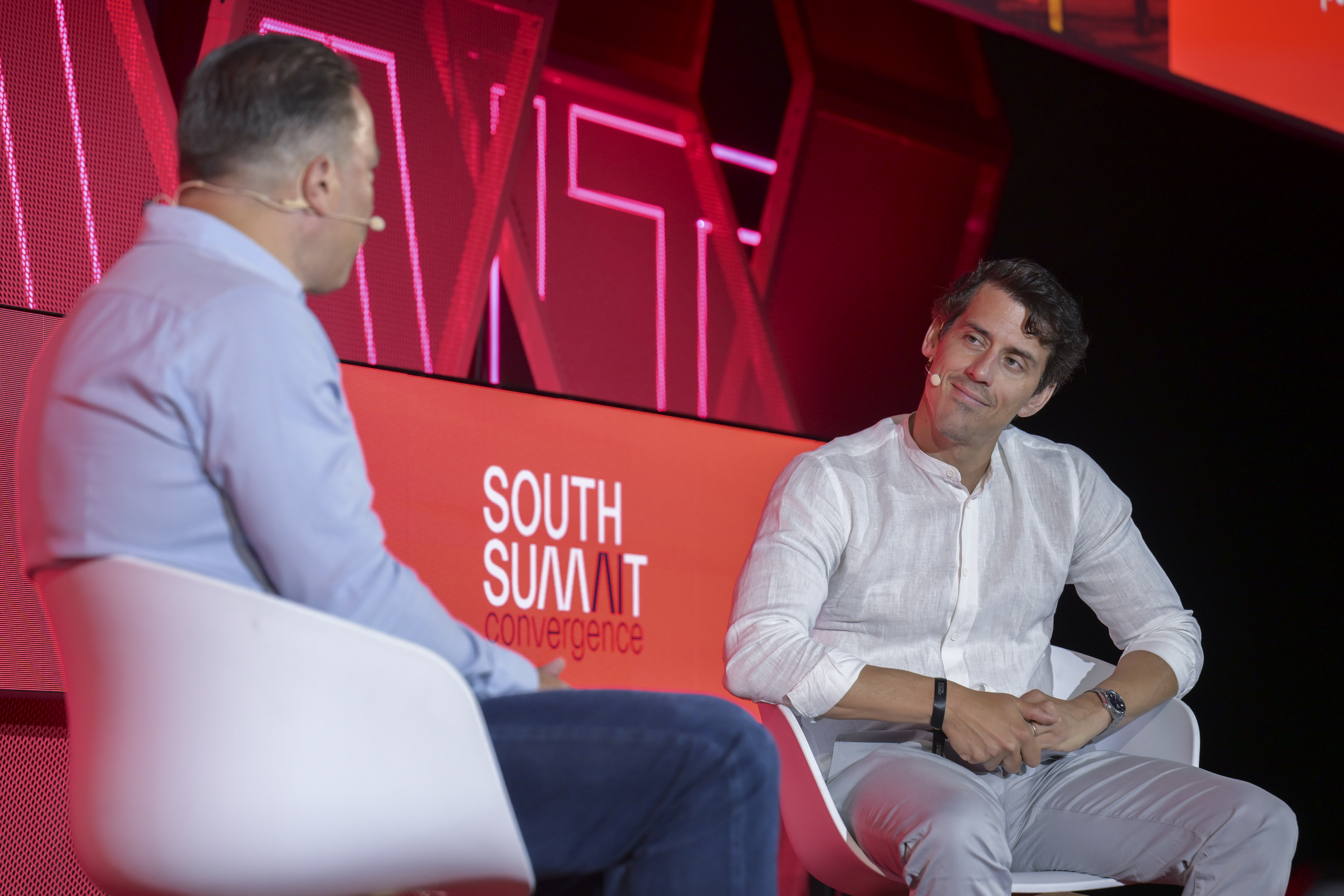
At South Summit Madrid, Mariano Otero, SVP at Fever, shared key lessons from the company’s journey during the session Scaling a Global Unicorn: From Breakout to Market Leadership, alongside Davor Hebel, Managing Partner at Eight Roads.
Their conversation offered a practical blueprint for startup scaling, international expansion, talent acquisition and AI-driven growth.
1. Start with a global market opportunity
Many startups struggle to scale because they target markets that are simply too small.
Fever was built around a simple idea: why wasn't there a platform for live entertainment comparable to what Netflix is for streaming or Spotify is for music?
The opportunity was enormous. Live entertainment is a trillion-dollar industry, yet it remains highly fragmented, with hundreds of regional players and no dominant global platform.
Today, Fever operates in 57 countries and more than 700 cities, processes over 100 million tickets annually and generates more than $1 billion in revenue.
The lesson for founders is clear: if your ambition is global growth, start by solving a problem that exists on a global scale.
2. Think Internationally from Day One
One of Fever’s boldest decisions was launching simultaneously in Madrid, London and New York. Instead of focusing exclusively on its home market, the company built its operations with international expansion in mind from the beginning. For Otero, this approach was essential. Companies that aspire to lead a category cannot afford to arrive late to the markets that define it.
As he explained during the session: “Build with a global mindset. Don’t build to optimize locally. Every decision should be evaluated based on its global applicability.”
That philosophy shaped the company’s technology, operations and commercial strategy, allowing Fever to serve global partners consistently across dozens of countries.
3. Build where you can attract and retain talent
Talent is one of the most important drivers of startup growth. While many founders look to Silicon Valley, Fever chose to build from Europe and establish Madrid as a key technology hub.
The city offered access to strong technical talent, competitive hiring costs and a quality of life that helps retain employees over the long term.
But location is about more than cost efficiency. Top professionals increasingly want to work on products with global impact. Being able to contribute to projects deployed across New York, Tokyo or Sydney while living in Madrid creates a compelling proposition for international talent.
For startups looking to scale, attracting talent is important. Retaining it is equally critical.
4. Win the hardest customer first
One of the most valuable growth lessons shared during the session was simple: Go after the most demanding customer in your industry. In 2020, before becoming a unicorn, Fever decided to pursue Netflix as a partner. According to Otero, securing that partnership was several times harder than signing almost any other client at the time. However, the impact was far greater than the effort required.
Once Netflix trusted the company, conversations with other major entertainment brands became significantly easier.
Landing a category-defining customer creates credibility that accelerates growth, strengthens positioning and raises standards across the organisation. For founders, the takeaway is clear: the customers that seem hardest to win are often the ones that unlock the greatest opportunities.
5. Use data to create new opportunities
Although Fever operates in the entertainment industry, it sees itself as a data-driven company.
A perfect example is Candlelight, the series of candlelit classical music concerts that now takes place in hundreds of cities worldwide. The concept did not emerge from intuition alone. It was the result of analysing audience behaviour and identifying an unexpected market opportunity. Today, Candlelight is one of the company's most successful products.
Perhaps the most revealing statistic is that around 70% of attendees had never previously attended a classical music concert. The lesson is that data should not only help optimise decisions. It can also reveal entirely new business opportunities.
6. Integrate AI into core business functions
Like many fast-growing companies, Fever is investing heavily in Artificial Intelligence. However, the company does not view AI as an additional feature. Instead, it sees it as a tool for improving core business operations.
One of its most advanced applications is dynamic pricing. Using predictive AI models, Fever continuously analyses demand and automatically adjusts ticket prices to maximise both conversion and profitability. This allows the company to deliver the right price to the right customer at the right moment.
More importantly, these capabilities also benefit the event organisers using the platform, creating additional value that is difficult for competitors to replicate. As AI adoption accelerates across industries, the real advantage will come from embedding it deeply into business processes rather than simply adding AI-powered features.
Do the hard things first
The final message from the session may have been the most important. Many startups postpone difficult decisions in favour of short-term convenience. The problem is that these compromises often create limitations that become visible only when the company starts to scale.
Fever chose a different path. It launched internationally from day one, pursued world-class partners before it had major credentials and built infrastructure capable of supporting global growth long before it became necessary.
None of those decisions were easy. But they explain why the company has grown from a startup into a global market leader. For founders building the next generation of high-growth companies, the question is simple: Are you tackling the hardest challenges today, or simply postponing them until growth forces you to act?
What's Next?
The companies that become category leaders rarely wait until they feel ready. They make difficult decisions early, build with ambition and design for scale from the start.
At South Summit, these are the conversations that happen every year between founders, investors and corporate leaders shaping the future of innovation.
If you're building the next generation of global companies, now is the time to start those conversations. Join the South Summit 2027 waiting list and be among the first to receive updates on speakers, opportunities and participation.